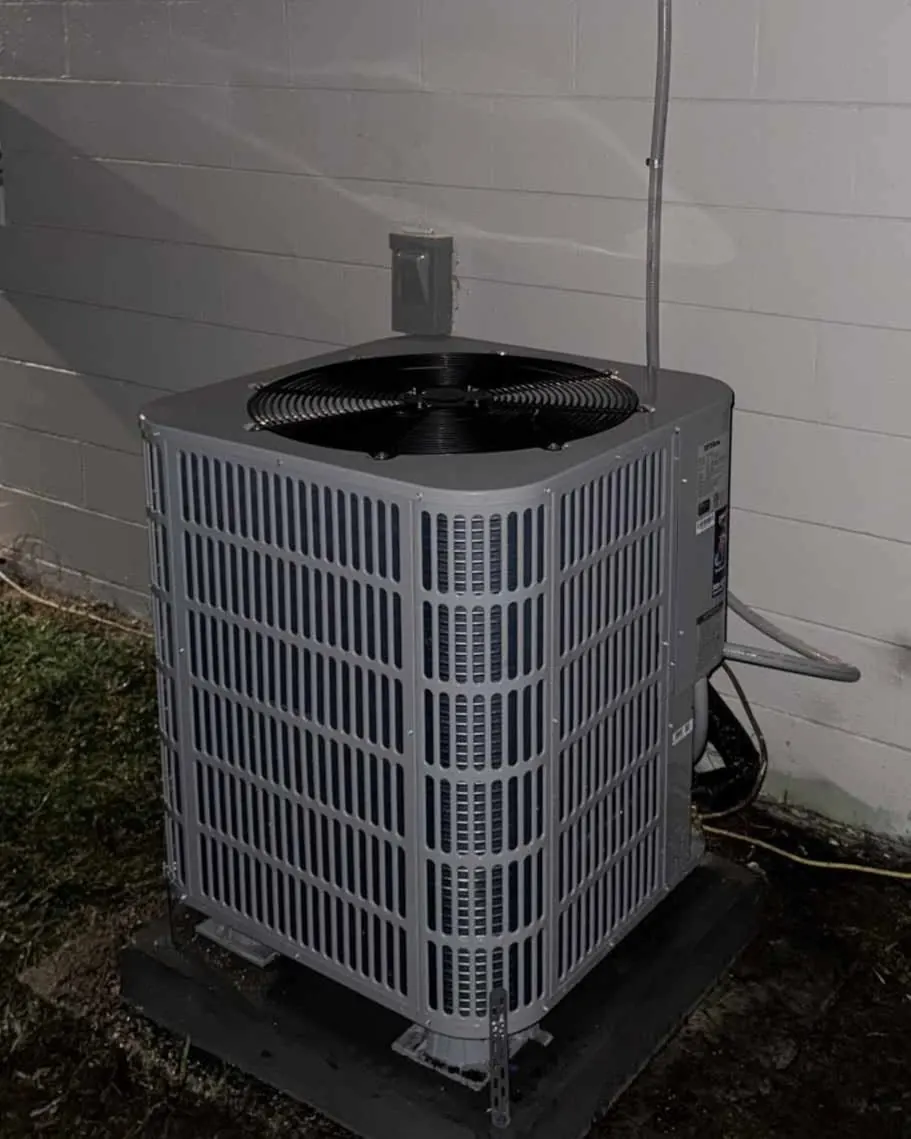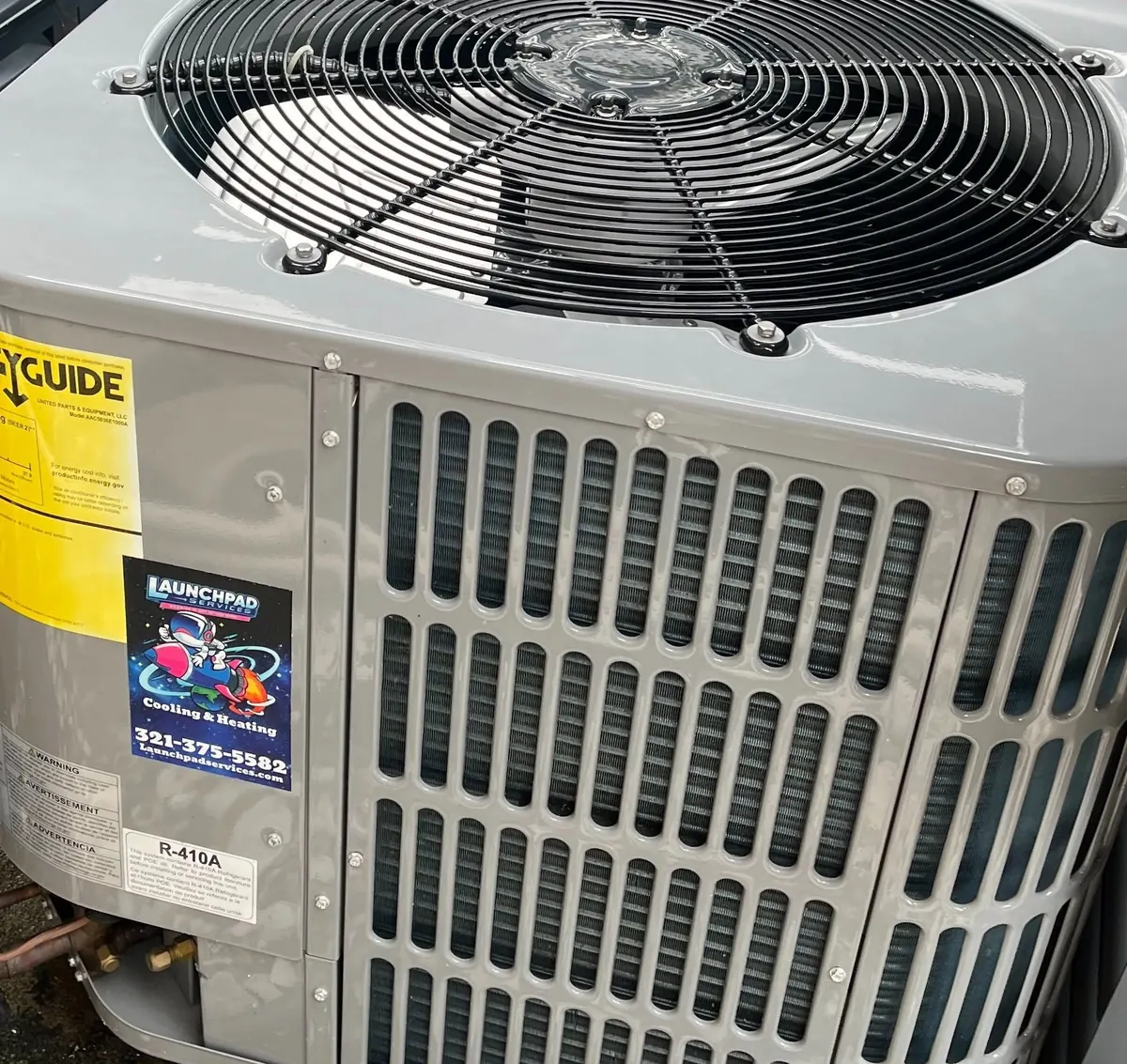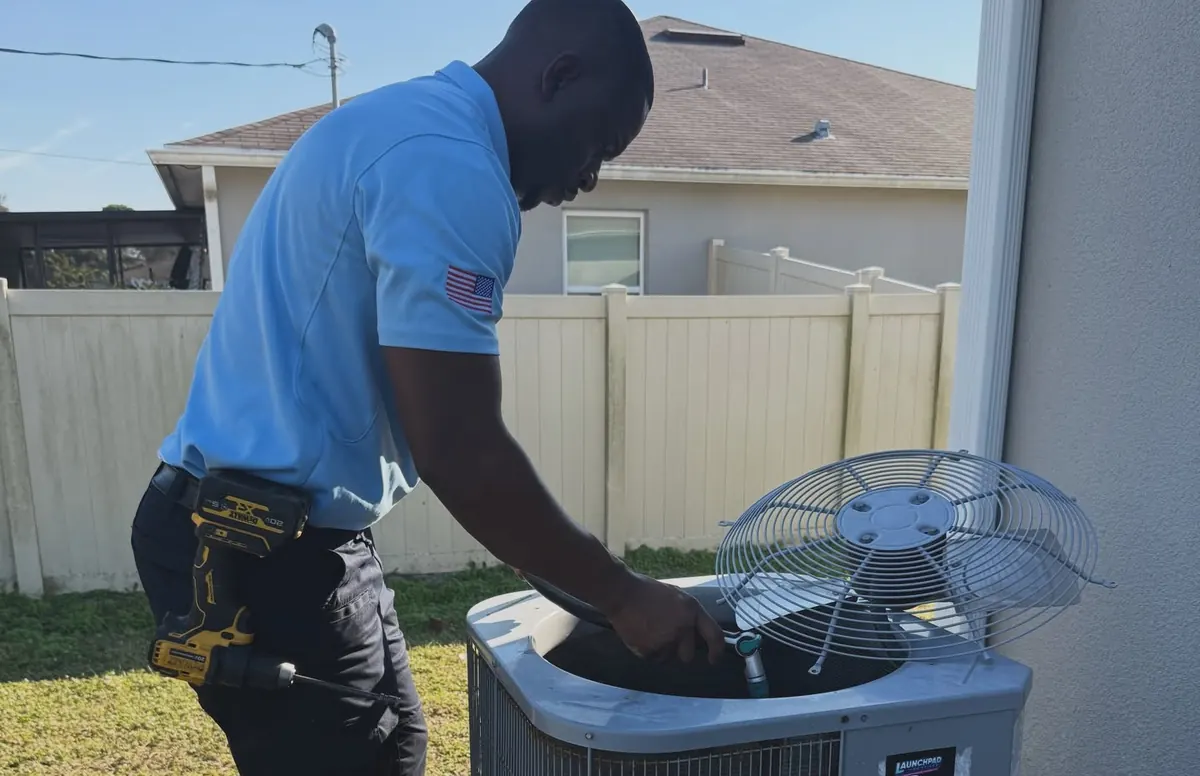
It's a story we hear constantly across Brevard County: the air conditioner runs all afternoon, the thermostat says 74, but the house still feels warm, sticky, and just plain uncomfortable. You crank it lower, the system runs even harder, your bill climbs — and you're still not comfortable. If that sounds familiar, here's the thing to understand: in Florida, comfort isn't just about temperature. It's about humidity.
Temperature vs. humidity: why 74 doesn't feel like 74
Your body cools itself by evaporating sweat. When the air is already saturated with moisture — as it almost always is in Brevard County — that evaporation slows down, and you feel warmer than the actual temperature. That's why a 74-degree room at 45% humidity feels crisp and pleasant, while the same 74 degrees at 65% humidity feels muggy and stale. Your AC might be hitting the temperature target perfectly and still leaving you miserable, because it isn't pulling enough moisture out of the air.
Air conditioners are supposed to do two jobs at once: lower the temperature and remove humidity. When a system is struggling with the second job, you get the classic Florida complaint — cold but clammy, or the thermostat set lower and lower with no relief.
The most common reasons your AC can't keep up
1. Your system is oversized
This is the big one, and it's counterintuitive. A unit that's too powerful for your home cools the air so quickly that it shuts off before it has time to wring moisture out of the air. It 'short cycles' — blasting cold, satisfying the thermostat in a few minutes, then shutting down, over and over. The result: a cold, humid, clammy house and a system that wears out early. Bigger is not better in Florida, which is exactly why we do a proper load calculation on every AC installation instead of just matching whatever was there before.
2. Low refrigerant or a dirty coil
If your system is low on refrigerant (usually from a leak) or the evaporator coil is caked in dust, it can't absorb heat and moisture properly. In severe cases the coil gets so cold it freezes into a block of ice — one of the most common calls we get. A frozen coil blocks airflow and makes everything worse. If you see ice on your indoor unit or the lines, switch the system to 'fan only' to thaw it and call for AC repair — running it frozen can damage the compressor.
3. Leaky ductwork and poor airflow
Your AC can be working perfectly and still lose the battle if the cold, dehumidified air never reaches your rooms. In many Brevard homes, ductwork runs through a blazing-hot attic and leaks at the joints — so you're literally paying to cool your attic while your living room stays humid. Undersized returns and crushed duct runs choke airflow too. This is why we take duct work and insulation seriously; sealing leaky ducts is often the single most effective comfort upgrade a Florida homeowner can make.
4. A clogged condensate drain
All that moisture your AC removes has to go somewhere — down the condensate drain line. In Florida's humidity, those lines clog with algae and gunk constantly. A clogged drain can trip a safety switch and shut your system down entirely, or back up and cause water damage. It's a simple fix and a standard part of maintenance, but it's a frequent cause of mysterious shutdowns.
5. Your home is just letting humid air in
Sometimes the AC isn't the whole problem. Air leaks around doors, windows, and attic penetrations let humid outdoor air pour in faster than your system can dehumidify it. Combine that with thin attic insulation and the Florida sun on your roof, and your AC is fighting an uphill battle all day.
What actually fixes a humidity problem
- Get a real diagnosis first. Humidity complaints can come from any of the causes above — or several at once. A good tech measures airflow, checks the refrigerant charge, and inspects the coil and ducts rather than guessing.
- Right-size any replacement. If you're replacing the system, insist on a load calculation. A correctly sized (or slightly modest) system that runs longer at lower speed pulls out far more moisture.
- Consider a variable-speed system. Two-stage and variable-speed equipment runs longer at lower output, which is excellent for dehumidification in our climate. It's the heart of our 'Better' and 'Best' installation tiers.
- Seal your ducts and top up insulation. Often cheaper than a new system and hugely effective.
- Add a whole-home dehumidifier. When the AC alone can't keep up, a dehumidifier integrated with your HVAC gives you direct control over indoor humidity — see our indoor air quality options. It also lets you keep the thermostat a touch higher and still feel comfortable, which saves energy.
The bottom line: if your Brevard County home feels warm and clammy no matter where you set the thermostat, don't just keep turning it down. That's a humidity problem, and turning the temperature down usually makes the bill worse without fixing the real issue. A proper diagnosis will pinpoint whether it's sizing, refrigerant, ducts, drainage, or air quality — and the fix is often more affordable than you'd expect.
Struggling with a humid home? Book an appointment online or call 321-375-5582 and we'll get to the bottom of it.